
Battery Energy Storage Systems
A battery energy storage system has to fit the grid connection, the duty cycle and the site. Ryan Sales represents JST battery energy storage, from 100 kW behind-the-meter cabinets to containerized grid-scale systems with direct connection up to 38 kV. We support utility, industrial and ERCOT projects in Texas and Oklahoma, and data center projects nationwide.
Send the voltage, ampacity and fault duty. A rep will narrow it down.
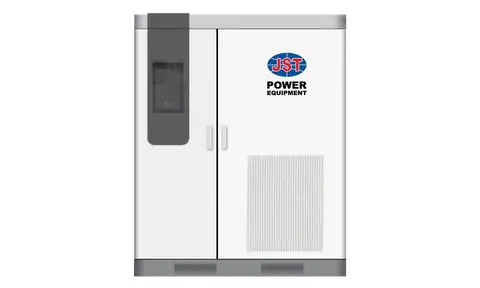 JST Power EquipmentCommercial & Industrial Battery Energy Storage SystemCabinet-style 100 kW battery energy storage for commercial and industrial peak shaving and backup.
- Power rating
- 100 kW
- Energy capacity
- 215 / 233 kWh
- Configuration
- Modular cabinet
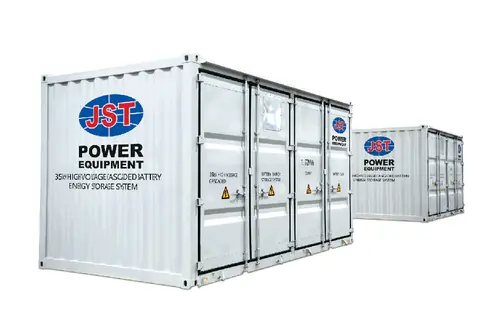 JST Power EquipmentGrid-Scale Battery Energy Storage SystemContainerized grid-scale battery energy storage from 1 MWh to over 1,000 MWh with direct medium voltage grid connection.
- Interconnection voltage
- Up to 38 kV
- Energy capacity
- 1 – 1000+ MWh
- Island operation
- Up to 5 MWh
How to choose battery energy storage systems
Grid-scale or behind-the-meter
Start with which side of the meter the system serves. Grid-scale systems firm solar and wind output, provide frequency regulation and manage peak load for utilities and large sites. The Grid-Scale Battery Energy Storage System scales from 1 MWh to over 1,000 MWh in containerized modules. Behind-the-meter systems cut demand charges and support on-site solar or EV charging, which is the job of the Commercial & Industrial Battery Energy Storage System.
Power and energy rating
Size power (kW or MW) and energy (kWh or MWh) separately, because they answer different questions. Power sets how much load the system can carry at once, while energy sets how long it can carry it. Peak shaving and demand charge reduction are usually power-limited over a short window, while backup and solar shifting need more energy. The JST C&I cabinet comes in 100 kW / 233 kWh and 100 kW / 215 kWh options.
| System | Size | Grid connection | Format |
|---|---|---|---|
| Grid-Scale BESS | 1 MWh to 1,000+ MWh | Up to 38 kV direct, H-bridge cascade | Modular containers |
| C&I BESS | 100 kW / 233 kWh or 100 kW / 215 kWh | Low voltage, behind-the-meter | Modular cabinet |
Interconnection voltage
Check the interconnection voltage early, because it drives the balance of plant. JST's grid-scale system uses a cascaded H-bridge topology to connect directly at up to 38 kV, which can reduce the step-up transformation a conventional low voltage inverter design needs. Where a project still needs substation equipment, plan transformers and switchgear alongside the battery. Both JST systems are IEEE 1547 compatible, the interconnection standard utilities reference for distributed resources.
Backup, islanding and data center use
If the system must carry load during a grid outage, confirm islanding capability rather than assuming it. The JST grid-scale system supports island operation up to 5 MWh, which suits microgrids and critical facilities. For data centers, storage can support peak management and backup strategies alongside generators and UPS, so define which role the battery plays before sizing it.
Site and deployment
Consider footprint and how the system grows. Containerized and cabinet formats are both modular, so capacity can be added in steps as load or market participation grows. Our reps can coordinate factory questions on configuration and schedule.
Read Medium Voltage Equipment for Data Centers for how storage fits the wider power system, and see our power transformers and packaged substations for the interconnection equipment.
Frequently asked questions
How does a BESS cut demand charges?
A battery energy storage system (BESS) cuts demand charges by discharging during a facility's highest-demand intervals. This lowers the peak power drawn from the utility, which sets the demand charge. The controller forecasts or tracks load and discharges when load nears a target, then recharges during low-demand or off-peak hours. The same system can shift energy to cheaper time-of-use periods. JST's C&I BESS includes time-of-use cost optimization.
Utility-scale vs C&I battery storage?
Utility-scale battery storage connects directly to the grid, usually at medium or high voltage, and supplies grid services such as capacity, frequency response and renewable firming. C&I (commercial and industrial) storage sits behind a customer's meter to reduce demand charges, shift energy use and provide backup. JST's grid-scale BESS scales from 1 MWh to over 1000 MWh with direct connection up to 38 kV. Its C&I system uses 100 kW cabinets of 215 or 233 kWh.