
Reclosers & Overhead Switches
Ryan Sales supplies distribution recloser and overhead switch equipment from G&W Electric and Richards MFG, spanning 12.1 kV through 72.5 kV sub-transmission. The G&W Viper line covers single-phase, three-phase and independent-pole solid dielectric reclosers, alongside Diamondback load break and Richards disconnect switches. Our reps help utilities and co-ops in Texas and Oklahoma apply them on feeders, laterals and tie points.
Send the voltage, ampacity and fault duty. A rep will narrow it down.
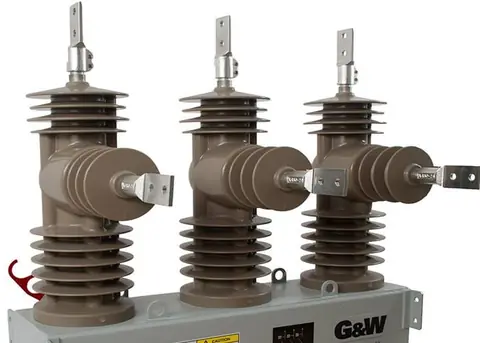 G&W ElectricDiamondback Solid Dielectric Load Break SwitchPole-mounted three-phase solid dielectric load break switch for overhead sectionalizing and automation.
- Maximum voltage
- 29.3 kV
- Continuous current
- 630 A
- Short-time withstand
- 12.5 (3 s) kA
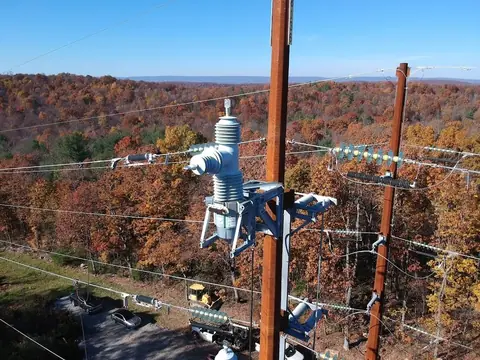 G&W ElectricViper-HV Sub-Transmission RecloserThe world's first 72.5kV solid dielectric pole-top recloser bringing substation-class protection to sub-transmission lines.
- Maximum voltage
- 72.5 kV
- Continuous current
- 1200 / 2000 A
- Symmetrical interrupting
- 31.5 kA
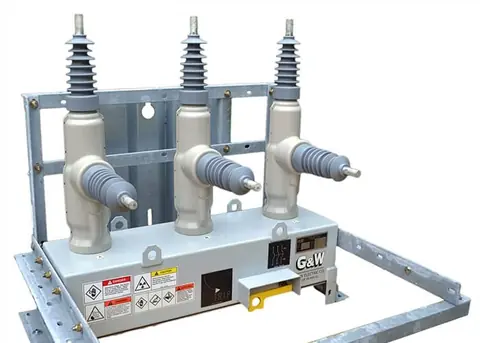 G&W ElectricViper-S Three-Phase RecloserMechanically ganged three-phase solid dielectric recloser for synchronized feeder protection.
- Voltage class
- 12.1–38 kV
- Continuous current
- 630–1000 A
- Symmetrical interrupting
- 12.5–16 kA
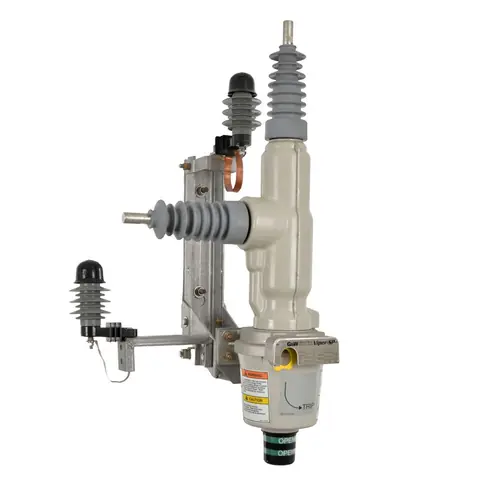 G&W ElectricViper-SP Single-Phase RecloserMaintenance-free single-phase solid dielectric recloser for overcurrent protection on single-phase circuits.
- Voltage class
- 15.5–38 kV
- Continuous current
- 630–800 A
- Symmetrical interrupting
- 12.5 kA
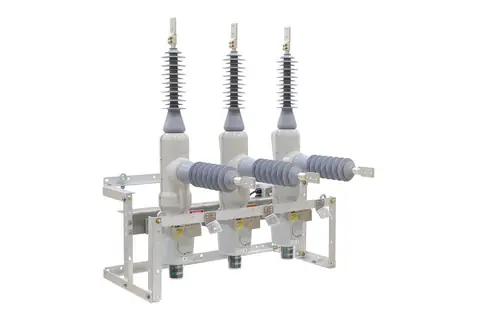 G&W ElectricViper-ST RecloserIndependent pole-operated solid dielectric recloser with flexible single-phase or three-phase trip and lockout modes.
- Voltage class
- 15.5 / 27 / 29.3 / 38 / 40.5 kV
- Continuous current
- Up to 800 A
- Symmetrical interrupting
- 12.5 / 16 kA
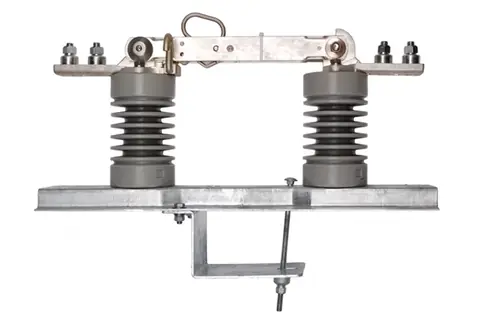 Richards MFGOverhead Disconnect Switch900A 15kV-class overhead distribution disconnect switch providing a straight disconnect point and low-cost live switching.
- Voltage class
- 15 kV
- Maximum voltage
- 15.5 L-L / 8.9 L-G kV
- Continuous current
- 900 A
How to choose reclosers & overhead switches
Distribution or sub-transmission voltage
Start with the line voltage, because it narrows the field quickly. Distribution feeders from 12.1 kV to 38 kV are covered by the Viper-S, Viper-SP and Viper-ST. For 69 kV class lines, the Viper-HV is rated 72.5 kV maximum with 350 kV BIL, bringing breaker-class protection to a pole top and often avoiding a new substation bay.
Single-phase or three-phase tripping
Decide how you want the recloser to trip and lock out. The Viper-S is mechanically ganged, so all three phases open together, which protects three-phase motor loads from single-phasing. The Viper-ST has independent poles and can trip single-phase or three-phase, so a fault on one phase need not drop customers on the other two. For single-phase laterals and rural taps, the Viper-SP does the job without a three-phase unit.
| Model | Voltage | Continuous | Sym interrupting | Operation |
|---|---|---|---|---|
| Viper-SP | 15.5-38 kV | 630-800 A | 12.5 kA | Single-phase |
| Viper-S | 12.1-38 kV | 630-1000 A | 12.5-16 kA | Ganged three-phase |
| Viper-ST | 15.5-40.5 kV ratings | Up to 800 A | 12.5/16 kA | Independent pole |
| Viper-HV | 72.5 kV max | 1200/2000 A | 31.5 kA | Sub-transmission |
Fault duty and load current
Check the available fault current at the install point against the interrupting rating, and size continuous current to peak load plus contingency transfers. All four Viper models are rated for 10,000 operations, which matters on feeders with frequent temporary faults from wind, lightning and vegetation.
Wildfire mitigation and automation
In fire-prone areas such as the Texas Panhandle, many utilities run reclosers in a fast-trip, non-reclosing mode during high-risk weather. Solid dielectric reclosers suit this role because they have no oil, and the Viper-ST lists wildfire mitigation, loop automation and renewable intertie among its applications, with up to six voltage sensors and dual-ratio CTs for control inputs.
When a switch is enough
Not every point needs fault interruption. The Diamondback is a three-phase solid dielectric load break switch for sectionalizing, tie points and SCADA-controlled transfer. For a simple visible disconnect on a branch feeder, the Richards Overhead Disconnect Switch is rated 900 A at 15 kV class with 110 kV BIL.
For deeper background, read What Is a Recloser and Wildfire Mitigation Grid Equipment, see Distribution Automation for control and communication options, or request a quote.
Frequently asked questions
What is a recloser and how does it work?
A recloser is a self-contained circuit breaker with a built-in control that trips when it senses a fault and then closes again automatically. Most overhead faults are temporary, such as lightning or a branch touching a line, so a quick reclose brings power back. If the fault is still there after a set number of tries, the recloser locks open to isolate that section. G&W's Viper-ST and Viper-S reclosers use vacuum interrupters in solid dielectric insulation.
Recloser vs circuit breaker?
A recloser is a type of circuit breaker that has its sensing, control and reclosing logic built in and is made to mount out on the line. A substation circuit breaker relies on separate relays and controls. Breakers usually carry higher continuous and interrupting ratings and sit at the source. Reclosers protect points along a feeder and can coordinate with fuses downstream. G&W's Viper-HV reaches 72.5 kV for sub-transmission, overlapping with breaker applications.
Single-phase vs three-phase recloser?
Single-phase reclosers protect single-phase laterals and taps, and three-phase reclosers protect three-phase mains and loads. On single-phase lines, a fault on one phase takes out only that phase's customers. Three-phase units open all phases together, which protects three-phase motors from running on a missing phase. Some three-phase units can also trip one phase at a time. G&W offers the Viper-SP single-phase recloser and the Viper-S and Viper-ST three-phase reclosers.
How do reclosers reduce wildfire risk?
Reclosers help lower wildfire risk by cutting off fault energy quickly and by limiting automatic reclosing when fire danger is high. During fire season, utilities often switch reclosers to fast, sensitive trip settings with reclosing turned off, so a line is not closed back into a fault that could spark a fire. Sealed vacuum interrupters keep the arc inside the device. G&W Viper reclosers support these protection schemes. Lindsey's FIREBird system adds wildfire detection along rights-of-way.