
Polymer Fuse Cutouts
Ryan Sales supplies silicone polymer fuse cutout products from ARP in 15 kV, 27 kV and 36 kV classes. The line includes 100 A and 200 A fused cutouts, 300 A solid blade cutout switches, and coupling insulators that add insulation value to existing cutouts. Our reps help utilities, co-ops and line contractors in Texas and Oklahoma pick the right class and configuration.
Send the voltage, ampacity and fault duty. A rep will narrow it down.
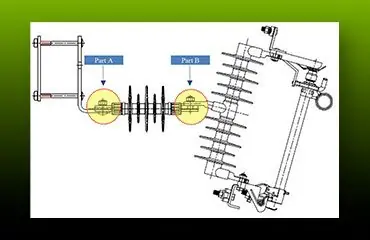 ARPPolymer Coupling Insulator with NEMA Type B BracketsPolymer coupling insulator with NEMA Type B brackets that increases the insulation value of cutout switches.
- Mounting
- NEMA Type B brackets
- Insulation
- Polymer
- Application
- Increases cutout switch insulation value
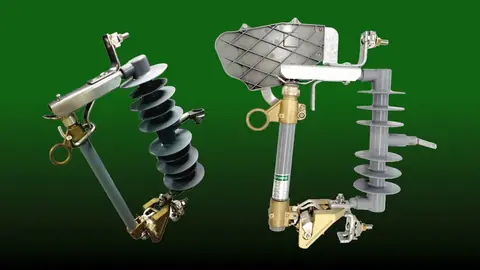 ARPSilicone Polymer Fuse Cutouts (Loadbreak and Non-Loadbreak)Silicone polymer fuse tube cutouts in 15/27/36kV classes with 100A or 200A ratings, loadbreak or non-loadbreak.
- Voltage class
- 15 / 27 / 36 kV
- Continuous current
- 100 / 200 A
- Configuration
- Loadbreak / non-loadbreak
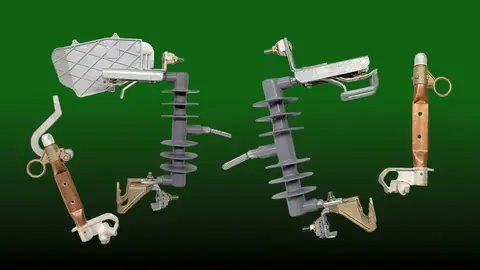 ARPSolid Blade Silicone Polymer Cutout Switches 300A300A solid blade silicone polymer cutout switches in 15/27/36kV classes, load break and non-load break.
- Voltage class
- 15 / 27 / 36 kV
- Continuous current
- 300 A
- Configuration
- Solid blade; load break / non-load break
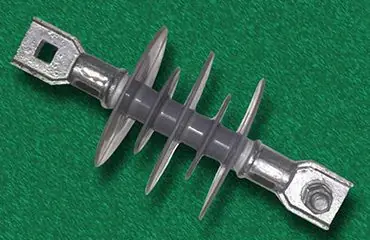 ARPSpecialty Cutout Switch Coupling InsulatorSpecialty silicone polymer coupling insulator for extending cutout switch insulation.
- Insulation
- Silicone polymer
- Application
- Couples to cutout switches; adds insulation value
How to choose polymer fuse cutouts
Voltage class
Match the cutout class to the system voltage and insulation coordination on the structure. ARP builds its Silicone Polymer Fuse Cutouts and Solid Blade Cutout Switches in 15 kV, 27 kV and 36 kV classes. Where a 25 kV system sees heavy contamination or lightning exposure, many utilities step up a class for extra creepage and insulation.
Fused cutout or solid blade switch
Decide whether the device must protect or only disconnect. A fused cutout holds a fuse link that melts and drops the tube open on a fault, protecting a transformer or lateral. A solid blade cutout switch replaces the fuse tube with a copper blade, giving a visible, hot-stick operable disconnect point on a feeder with no protective function.
| Product | Classes | Current | Function | Loadbreak option |
|---|---|---|---|---|
| Polymer Fuse Cutouts | 15/27/36 kV | 100 A or 200 A | Fusing and switching | Yes |
| Solid Blade Cutout Switches | 15/27/36 kV | 300 A | Sectionalizing and disconnect | Yes |
Loadbreak or non-loadbreak
Choose loadbreak when crews will open the cutout under load. Loadbreak versions include arc-interrupting features that let a lineworker open the device with a hot stick while current is flowing. Non-loadbreak cutouts cost less but must be opened with a portable loadbreak tool, or only after the load is removed. Your switching procedures and crew tooling usually decide this.
Silicone polymer over porcelain
Silicone polymer bodies weigh less than porcelain, do not shatter when struck or dropped, and shed water, which keeps leakage current down in dusty or coastal air. ARP over-molds silicone on a wound fiberglass core and uses brass and stainless steel hardware to resist corrosion. For many Texas and Oklahoma utilities, the switch from porcelain is driven by breakage and vandalism losses.
Adding insulation to existing cutouts
When an existing cutout needs more insulation for wildlife protection or contamination, a coupling insulator can extend it without changing the cutout. The Polymer Coupling Insulator with NEMA Type B Brackets fits existing NEMA-mount installations, and the Specialty Cutout Switch Coupling Insulator extends insulation on cutout switch mountings.
For deeper background, read Polymer vs Porcelain Insulators, see Polymer Insulators for matching line hardware, or request a quote.
Frequently asked questions
Polymer vs porcelain cutouts?
Polymer cutouts are lighter and hard to break, and their silicone housings shed water, which helps in dirty or coastal areas. Porcelain cutouts have a long field record and resist UV and aging well. However, porcelain can crack from impact or thermal stress, and hidden cracks can lead to failures. Many utilities now choose polymer for new work. ARP's cutouts use a silicone polymer body over-molded onto a wound fiberglass core.
What is a loadbreak cutout?
A loadbreak cutout is a fuse cutout with a built-in device that lets a lineworker open it while it carries load, using a hot stick. The device, usually an arc chute, contains and puts out the arc as the fuse door opens. Without it, opening a cutout under load needs a separate portable loadbreak tool, or the circuit must be de-energized first. ARP offers silicone polymer cutouts in both loadbreak and non-loadbreak versions.
100A vs 200A vs 300A cutout?
The 100 A, 200 A and 300 A ratings are the cutout's continuous current rating, which sets the largest load it can carry. Use a 100 A cutout for most transformer and lateral fusing. Choose 200 A for heavier laterals or higher-rated fuse links. A 300 A solid blade cutout holds no fuse and serves as a single-phase disconnect switch. ARP makes 100 A and 200 A fused cutouts and 300 A solid blade versions at 15, 27 and 36 kV.