
Voltage & Current Sensors
Ryan Sales supplies medium voltage sensors from Lindsey and G&W Electric for overhead lines, substations, underground equipment and switchgear. The range runs from low voltage switchgear sensors rated to 1,000 VAC up to Accusense voltage sensors rated to 38 kV. Our reps help utilities, co-ops and contractors in Texas and Oklahoma choose and apply the right sensor, and support data center projects nationwide.
Used on data center projects · nationwide Substation equipment
Send the voltage, ampacity and fault duty. A rep will narrow it down.
 G&W ElectricAccusense Combined Current and Voltage SensorsCombined current and voltage sensors using Rogowski coil technology for metering-class grid measurement.
- Maximum voltage
- Up to 27 kV
- Accuracy
- Metering-class
- Current sensing
- Rogowski coil
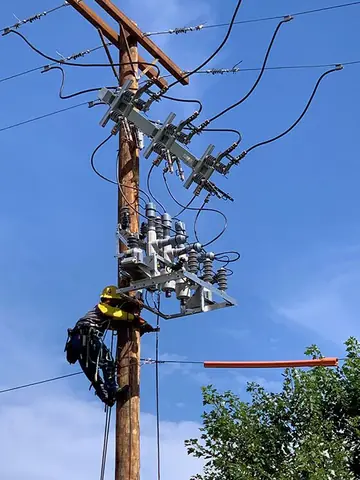 G&W ElectricAccusense Voltage SensorsHigh-accuracy low-power voltage sensors for outdoor, indoor and underground medium-voltage monitoring.
- Maximum voltage
- Up to 38 kV
- Models
- VS-27-O / VS-38-O / VS-24-I / VS-27-UG
- Accuracy
- Metering-class
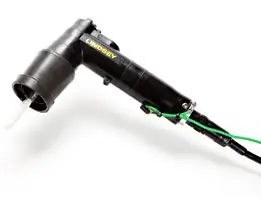 Lindsey Systems200A Separable Connector Voltage SensorsIEEE 386 elbow and T-body voltage sensors for 200A deadfront padmount and underground equipment.
- Voltage class
- 15 / 25 / 35 kV
- Continuous current
- 200 A
- Accuracy
- 0.3 / 0.5 %
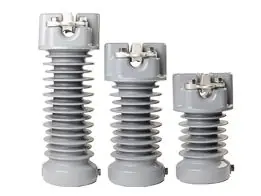 Lindsey SystemsBusbar Style SensorsBusbar-mount current and voltage sensors with standard 2- or 4-hole NEMA pads for substation installations.
- Voltage class
- Through 35 kV
- Mounting
- Standard 2- or 4-hole NEMA pad
- Phase shift
- None
Lindsey SystemsCVMB Current & Voltage Sensing BushingCombined current and voltage sensing bushing for switchgear and equipment OEMs.- Configuration
- Combined current and voltage sensing
- Mounting
- Bushing form factor
- Application
- OEM integration
Lindsey SystemsClamp-Top Line Post SensorsDrop-in clamp-top sensors that replace existing horizontal or vertical line post insulators without cutting the conductor.- Voltage class
- 15–35 kV
- Mounting
- Horizontal / vertical
- Configuration
- Direct replacement for clamp-top line post insulators; no conductor cutting
Lindsey SystemsElbowSense Voltage SensorsSubmersible-rated 600A/900A elbow voltage sensors for underground switchgear and vault applications.- Voltage class
- 15 / 25 / 35 kV
- Continuous current
- 600 / 900 A
- Accuracy
- 0.3 / 0.5 %
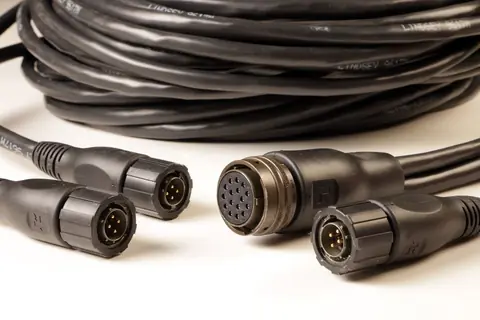 Lindsey SystemsGEN2 MultiCore Line Post SensorCombined current/voltage line post sensor delivering 0.2% voltage accuracy for smart grid monitoring on overhead distribution lines.
- Voltage class
- 15–35 kV
- Voltage accuracy
- 0.2 / 0.5 %
- Current accuracy
- 1 %
Lindsey SystemsLEA/LPIT Low Energy Analog SensorsIEEE C37.92 / IEC 61869 compliant low energy analog sensors with RJ-45 connectivity for modern protective relays.- Output
- RJ-45 connectors
- Compatibility
- SEL and Siemens relays
- Standards
- IEEE C37.92; IEC 61869-10 / -11 / -13
Lindsey SystemsNeutral Current SensorNeutral current sensor for detecting unbalance on overhead and padmount distribution capacitor banks.- Application
- Neutral current unbalance sensing; overhead and padmount capacitor banks
- Output
- Controller-compatible
Lindsey SystemsSF6 Voltage SensorsVoltage sensors designed for SF6 gas-insulated switchgear through 25 kV.- Voltage class
- Through 25 kV
- Accuracy
- 0.3 / 0.5 %
- Insulation
- SF6 switchgear compatible
Lindsey SystemsSVMI Voltage SensorsCompact voltage-only sensors sized for recloser and switch installations, with a higher-accuracy option.- Voltage class
- 15–35 kV
- Configuration
- Voltage-only
- Accuracy
- Higher accuracy option available
Lindsey SystemsStandoff Insulator Voltage Sensors (VMI)High-accuracy standoff insulator voltage sensors with flat response through the 20th harmonic.- Voltage class
- Through 35 kV
- Frequency response
- Flat through 20th harmonic
- Accuracy
- High accuracy
Lindsey SystemsTraditional Line Post Insulator SensorsProven line post insulator sensors providing voltage-only, current-only, or combined sensing with field-demonstrated reliability.- Voltage class
- 15–35 kV
- Voltage accuracy
- 0.5 %
- Current accuracy
- 1 %
Lindsey SystemsTube Type Substation SensorsThreaded-conductor tube style sensors for substation current and voltage measurement.- Voltage class
- Through 35 kV
- Material
- Stainless steel conductor tubes
- Configuration
- Combined current/voltage options
Lindsey SystemsType 9561 LV Switchgear Voltage SensorLow voltage switchgear sensor measuring circuits up to 1000 VAC with 0.5% or 1% accuracy.- Maximum voltage
- Up to 1000 VAC
- Accuracy
- 0.5 / 1 %
- Application
- LV switchgear
Lindsey SystemsType LVS Live Front Voltage SensorCompact voltage sensor for space-limited live-front air-insulated switchgear.- Voltage class
- Through 35 kV
- Accuracy
- 0.3 / 0.5 %
- Application
- Live-front air-insulated switchgear
Lindsey SystemsType UOV Oil-Filled Voltage SensorUnder-oil voltage sensors for oil-filled transformers and switchgear up to 35 kV.- Voltage class
- Through 35 kV
- Accuracy
- 0.3 / 0.5 %
- Insulation
- Under-oil operation
Lindsey SystemsUnderground Current SensorsRing-type and split-core current sensors, including Rogowski coil options, for underground and switchgear circuits.- Voltage class
- Through 35 kV; 600 V versions
- Accuracy
- To 0.15S
- Configuration
- Ring-type / split-core; Rogowski coil option
Lindsey SystemsUnderground Power SupplyPatented sensor-powered 12VDC supply with battery backup for powering devices in underground enclosures.- Output
- 12 VDC
- Power source
- Sensor-derived
- Enclosure
- Magnetic mount cabinet
Lindsey SystemsWildlife Covers for SensorsSnap-on animal protection covers for Lindsey GEN2 and SVMI sensors to reduce wildlife-related outages.- Compatibility
- GEN2 and SVMI sensors
- Application
- Wildlife/avian outage protection
- Installation
- Field installable
How to choose voltage & current sensors
Mounting location and interface
Start with where the sensor has to live, because that narrows the list quickly. Overhead feeders use line post designs such as the GEN2 MultiCore Line Post Sensor, and the Clamp-Top Line Post Sensors replace existing clamp-top insulators without cutting the conductor. Underground gear calls for sensors built into the separable connector: the 200A Separable Connector Voltage Sensors fit IEEE 386 200 A interfaces, while ElbowSense Voltage Sensors cover 600 A and 900 A deadbreak interfaces and are submersible rated.
Voltage, current or combined sensing
Decide which quantities the control or relay actually needs. Volt/VAR control and voltage monitoring at a recloser may only need voltage, which is where compact voltage-only units like the SVMI Voltage Sensors fit. Feeder automation, fault location and metering usually need both, so a combined line post sensor or the Rogowski-coil-based Accusense Combined Current and Voltage Sensors saves a second device per phase.
Accuracy and harmonic response
Match the accuracy class to the application rather than buying the tightest one everywhere. Metering and conservation voltage reduction benefit from tighter voltage accuracy, while fault detection and general feeder monitoring tolerate more. If power quality or harmonics matter, look for a flat frequency response, such as the Standoff Insulator Voltage Sensors (VMI), which are flat through the 20th harmonic.
| Sensor | Voltage class | Stated accuracy | Interface |
|---|---|---|---|
| GEN2 MultiCore Line Post | 15-35 kV class | 0.2% or 0.5% V; 1% I | Overhead line post |
| Traditional Line Post Insulator | 15-35 kV class | 0.5% V; 1% I | Overhead line post |
| 200A Separable Connector | 15, 25, 35 kV class | 0.3% or 0.5% V | 200 A elbow or T-body |
| ElbowSense | 15, 25, 35 kV class | 0.3% or 0.5% V | 600 A / 900 A deadbreak |
| Type 9561 LV Switchgear | Up to 1,000 VAC | 0.5% or 1% V | LV switchgear |
Output type and relay compatibility
Confirm the sensor output matches the relay or control input before you specify it. Low-power and low-energy analog sensors produce a small signal that a conventional 120 V or 5 A input cannot read, so they pair with relays and controls built to accept them. The LEA/LPIT Low Energy Analog Sensors are IEEE C37.92 and IEC 61869 compliant with RJ-45 connections for compatible SEL and Siemens relays.
Installation and site conditions
Consider how the sensor goes in and what it will face. Several Lindsey overhead sensors are live-line installable, which avoids an outage for retrofits. Where wildlife outages are a concern, add Wildlife Covers for Sensors for GEN2 and SVMI units.
For more on the technology tradeoff, read LPIT Sensors vs CTs and PTs, and see our distribution automation page for the schemes these sensors feed.
Frequently asked questions
What is an LPIT sensor?
An LPIT (low power instrument transformer) is a sensor that sends a low-level signal, in volts or millivolts, to relays and controls in place of the 120 V or 5 A outputs of traditional instrument transformers. Voltage LPITs usually use resistive or capacitive dividers, and current LPITs often use Rogowski coils. G&W's Accusense sensors and Lindsey's LEA/LPIT sensors, which meet IEEE C37.92 and IEC 61869, use this technology.
Sensors vs traditional CTs and PTs?
Sensors are smaller, lighter and safer to handle than traditional CTs and PTs. They also measure accurately over a wider range, because Rogowski coils do not saturate. Traditional CTs and PTs deliver enough power for older electromechanical relays and meters, which low-energy sensors cannot drive. Sensors need relays or controls that accept low-level inputs. Lindsey sensors offer voltage accuracy to 0.2% or 0.5% with no phase shift.
Can sensors be retrofit to existing reclosers?
Yes, in most cases, if the recloser control can accept the sensor's output. Voltage sensors can mount on the recloser or its bracket, and line post sensors can replace insulators nearby. Some install on live lines. Lindsey's SVMI voltage sensors are designed for recloser and switch mounting, and its clamp-top line post sensors replace existing insulators without cutting the conductor. Ryan Sales can check compatibility with your controls.