
Gas-Insulated Switchgear & Ring Main Units
Ryan Sales represents JST gas insulated switchgear from 5 kV to 69 kV, including the J10N and J20N dry air designs that use no SF6. The line also includes J10X ring main units and J20X cubicle-type GIS for primary distribution substations. We support utilities, industrial plants and contractors in Texas and Oklahoma, and data center projects nationwide.
Send the voltage, ampacity and fault duty. A rep will narrow it down.
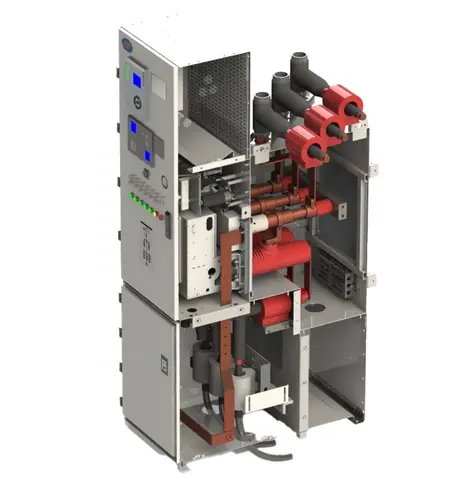 JST Power EquipmentJ10N Dry Air Gas-Insulated SwitchgearSF6-free gas-insulated switchgear using dry air insulation for compact 5 kV distribution lineups.
- Voltage class
- 5 kV
- Continuous current
- 600 A
- Short-time withstand
- 20 kA
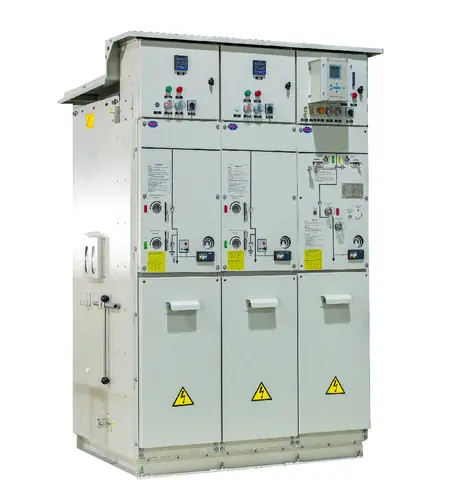 JST Power EquipmentJ10X Ring Main Unit Gas-Insulated SwitchgearCompact SF6 ring main unit switchgear for looped medium voltage distribution networks.
- Voltage class
- 15 / 27 / 38 kV
- BIL
- 95 / 125 / 150 kV
- Continuous current
- 600–1200 (individual tank); 600 (combined tank) A
JST Power EquipmentJ20N Dry Air Gas-Insulated Switchgear38 kV SF6-free gas-insulated switchgear that shrinks substation footprint by up to 75% versus air-insulated gear.- Voltage class
- 38 (69 kV planned)
- Continuous current
- 1200 A
- Short-time withstand
- 31.5 kA
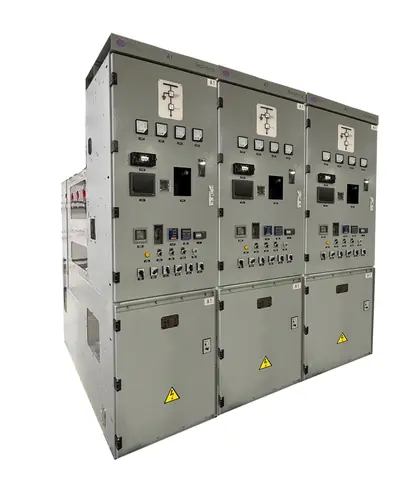 JST Power EquipmentJ20X Cubicle-Type Gas-Insulated SwitchgearCubicle-type gas-insulated switchgear for primary distribution up to 69 kV, fully arc resistant and customizable.
- Voltage class
- 5 / 38 / 69 kV
- Continuous current
- 600 / 2500 / 1200 A
- Short-time withstand
- 40 / 31.5 / 31.5 kA
How to choose gas-insulated switchgear & ring main units
Dry air or SF6 insulation
Choose the insulating gas first, because it sets both the regulatory exposure and the voltage ceiling. The J10N and J20N use dry air, so there is no SF6 to track or recover at end of life. The J10X ring main unit is SF6 insulated, and the J20X uses SF6 plus air. SF6 is a potent greenhouse gas, which is why owners with sustainability targets, including many data center developers, now ask for SF6-free gear first.
Voltage, current and fault ratings
Size the lineup to the service voltage, main bus current and available fault duty. The table compares the ratings JST publishes for each model.
| Model | Insulation | Voltage | Continuous | Short-circuit | BIL |
|---|---|---|---|---|---|
| J10N | Dry air | 5 kV | 600 A | 20 kA | 75 kV |
| J20N | Dry air | 38 kV (69 kV planned) | 1200 A | 31.5 kA | 170 kV |
| J10X | SF6 | 15 / 27 / 38 kV | 600-1200 A | 20-25 kA | 95 / 125 / 150 kV |
| J20X | SF6 + air | 5 / 38 / 69 kV | 600 / 2500 / 1200 A | 40 / 31.5 / 31.5 kA | 200 kV (38 kV), 325 kV (69 kV) |
For 69 kV service today, the J20X is the fit. At 38 kV, the J20N gives an SF6-free option at 1200 A, while the J20X carries up to 2500 A where the main bus needs it.
Ring main unit or cubicle-type lineup
Match the form factor to the network topology. A ring main unit like the J10X is built for looped distribution, feeding a load while switching two ring cables, which suits campuses, utility networks and renewables collection systems. It offers individual tanks at 600-1200 A or a combined tank at 600 A. Cubicle-type GIS such as the J20X builds a customizable lineup of feeder, main and tie sections for a primary distribution substation.
Footprint, arc resistance and lead time
GIS earns its place where space is tight. JST rates its GIS at up to 75% smaller than equivalent air-insulated switchgear, which can shrink a substation pad or an electrical room inside a data center building. The J20X is fully arc resistant, and the J10N and J20N carry IEC and IEEE internal arc classification, so confirm the arc rating your specification calls for. Lock ratings early on schedule-driven projects and ask your rep for current factory lead times.
For deeper background, read Solid Dielectric vs SF6 Switchgear and Medium Voltage Equipment for Data Centers, compare air-insulated options under Metal-Clad Switchgear & Breakers, or request a quote.
Frequently asked questions
What is SF6-free (dry air) switchgear?
SF6-free, or dry air, switchgear uses purified, dried air as the insulating gas instead of sulfur hexafluoride, and switches with vacuum interrupters. It removes the greenhouse gas concerns and handling rules that come with SF6. Because dry air insulates less well than SF6, designs make up for it with pressure, spacing and shielding. JST's J10N (5 kV) and J20N (38 kV) are dry air gas-insulated switchgear lines with UL listing and internal arc classification.
What is a ring main unit used for?
A ring main unit (RMU) is compact, sealed medium voltage switchgear used to connect equipment such as a distribution transformer to an underground loop. A typical RMU has two cable switches for the incoming and outgoing loop and a protected way, fused or with a breaker, for the load. If one side of the loop fails, the load can be fed from the other. JST's J10X RMU is rated at 15, 27 and 38 kV and is used in utility, campus and data center systems.
GIS vs air-insulated switchgear — which takes less space?
Gas-insulated switchgear takes much less floor space than air-insulated switchgear. In GIS the live parts sit in sealed, gas-filled enclosures, which allows much smaller clearances between phases. JST says its GIS lines are up to 75% smaller than equivalent AIS. AIS usually costs less at first and is easier to inspect and extend, so it suits sites with plenty of room. GIS is the better fit for tight electrical rooms, urban substations and data centers.