
Distribution Automation
Distribution automation cuts outage time by letting switches and controls find, isolate and restore around faults without waiting on a crew. Ryan Sales represents G&W Electric FLISR schemes, automatic source transfer and LaZer centralized software for 5-38 kV systems. Our reps help utilities, campuses and industrial users in Texas and Oklahoma scope schemes, and support data center projects nationwide.
Send the voltage, ampacity and fault duty. A rep will narrow it down.
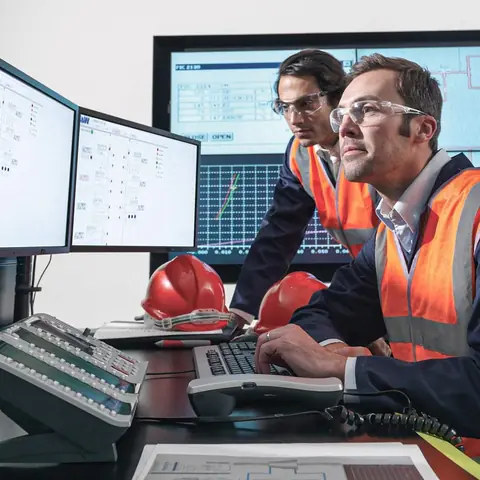 G&W ElectricAutomatic Source TransferAutomatic transfer solutions that switch critical loads to an alternate source on loss of voltage.
- Voltage class
- 5–38 kV
- Configuration
- Standalone or multi-switch schemes
- Transfer schemes
- Preferred/Alternate, Main/Tie/Main, multisource load shedding
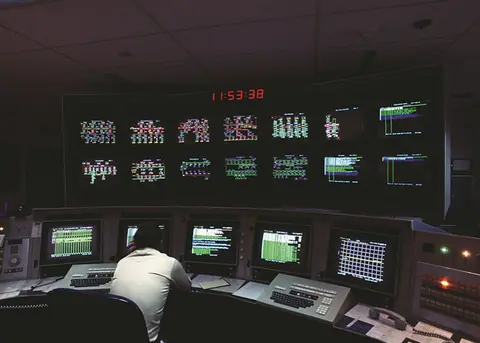
 G&W ElectricCentralized Software-Based AutomationServer-based LaZer grid automation software for centralized FLISR, CVR and Volt/Var optimization.
- Application
- Centralized FLISR, CVR, Volt/Var Optimization
- Device count
- Scalable, no device limits
- Controls
- Manual / semi-automatic / automatic modes
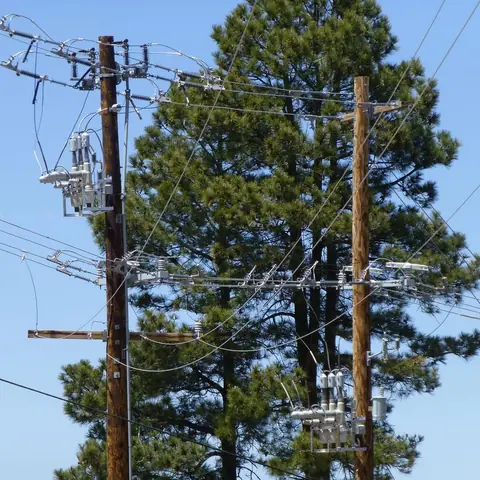
 G&W ElectricFault Location Isolation and Service RestorationFLISR systems that detect, isolate and restore around faults in seconds instead of hours.
- Voltage class
- 5–38 kV
- Restoration time
- As fast as 8 (closed loop) cycles
- Configuration
- Closed loop / open loop / multi-source network
How to choose distribution automation
Restoration scheme or source transfer
Start by defining the job: restoring a feeder network or protecting one critical load. Fault Location Isolation and Service Restoration (FLISR) schemes locate a fault, open the switches on either side and re-energize healthy sections from alternate sources. Automatic Source Transfer is narrower and faster to scope: on loss of voltage it moves a critical load, such as a hospital, campus or data center, to an alternate source.
Decentralized or centralized control
Choose where the logic lives based on your communications and SCADA maturity. Decentralized schemes run peer-to-peer between switch controls, so they keep working without a central server and suit a small number of feeders or a single site. Centralized Software-Based Automation runs on G&W's LaZer server software, which scales across many devices and adds manual, semi-automatic and automatic operating modes for operators who want to supervise restoration.
| System | Voltage | Control | Key capability |
|---|---|---|---|
| FLISR | 5-38 kV | Decentralized or centralized | Closed loop restoration as fast as 8 cycles |
| Automatic Source Transfer | 5-38 kV | Standalone or multi-switch | Peer-to-peer high-speed transfer |
| Centralized Software-Based Automation | Distribution systems | Centralized server | FLISR, CVR and Volt/VAR optimization |
Loop configuration and restoration speed
Understand the tradeoff between open and closed loop designs. Open loop schemes interrupt customers briefly while switches reconfigure, while closed loop schemes keep the loop tied and can isolate a fault fast enough that most customers see only a momentary disturbance. G&W states closed loop FLISR restoration as fast as 8 cycles, which is why closed loops show up at critical facilities and downtown networks. The cost is tighter protection coordination and faster communications.
Transition type and communications
For source transfer, decide between open and closed transition. Open transition briefly drops the load during transfer; closed transition parallels the sources momentarily and requires utility agreement and suitable protection. Either way, the scheme is only as fast as its communications, and G&W supports fiber, cellular and radio links.
Voltage optimization
If the goal includes energy savings or voltage control, plan for a centralized system. The LaZer platform adds conservation voltage reduction (CVR) and Volt/VAR optimization alongside FLISR, which needs accurate voltage measurement along the feeder.
Read What Is FLISR? for the fundamentals, and see our reclosers and overhead switches for the switching devices these schemes control.
Frequently asked questions
What is FLISR?
FLISR stands for fault location, isolation and service restoration. It is an automation scheme that finds a fault on a distribution feeder and opens switches on both sides of the faulted section. It then restores power to healthy sections from the normal or an alternate source. It can run on distributed controls or central software. G&W Electric offers FLISR in open loop, closed loop and multi-source configurations, with closed loop restoration as fast as 8 cycles.
How does medium-voltage automatic source transfer work?
Medium voltage automatic source transfer keeps a critical load on line by switching from its preferred feeder to an alternate one when the preferred source fails. Controls watch voltage on both sources and open the preferred switch before closing the alternate one. In closed transition, the sources are briefly paralleled. G&W Electric's automatic source transfer works from 5 to 38 kV, and its Trident-SR switchgear can transfer in under 10 cycles.
What does a self-healing grid need?
A self-healing grid needs sectionalizing devices that can sense and interrupt faults, such as reclosers and automated switchgear. It also needs accurate voltage and current sensors, reliable communications and tie points to alternate sources with spare capacity. Protection coordination and control logic, either distributed or centralized, decide what to open and close. G&W Electric supplies automated switchgear, FLISR schemes and centralized software to tie these together.