
Polymer Insulators
Ryan Sales supplies silicone polymer insulators from ARP for distribution and substation work from 7.5 kV to 69 kV. The line covers dead end suspension, line post, tie top, top clamp and station post insulators, plus clevis pins, gain bases and wire clamps. Our reps help utilities, co-ops and line contractors in Texas and Oklahoma match insulators to structures and conditions.
Send the voltage, ampacity and fault duty. A rep will narrow it down.
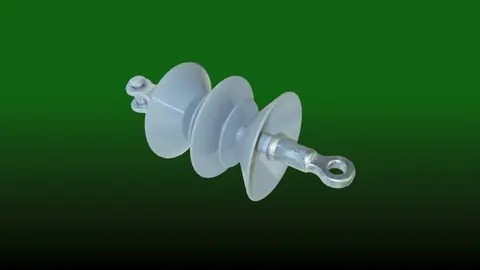 ARP27kV Specialty Horizontal Dead End InsulatorCompact 27kV silicone polymer insulator that replaces two 10-inch porcelain disk assemblies in horizontal dead end applications.
- Voltage class
- 27 kV
- Mounting
- Horizontal applications only
- Configuration
- Replaces two 10 in (254 mm) porcelain suspension disks
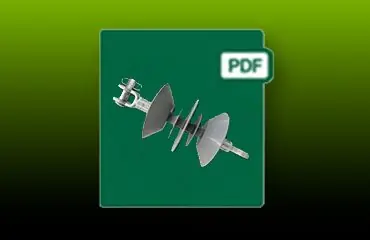 ARP27kV Specialty Insulator with Clevis PinThe 27kV horizontal specialty polymer insulator supplied complete with ARP's clevis pin hardware.
- Voltage class
- 27 kV
- Mounting
- Horizontal dead end only
- Configuration
- Replaces two 10 in porcelain disks
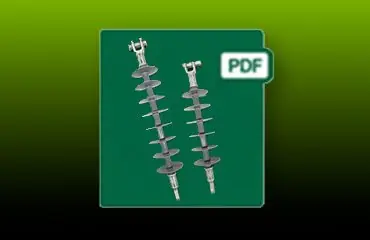 ARPClevis Pin with Self-Contained Sliding LockClevis pin with a self-contained sliding lock for ARP dead end suspension insulators from 15kV to 69kV.
- Voltage class
- 15–69 (compatible insulator range) kV
- Retention
- Self-contained sliding lock; no separate cotter keys
- Configuration
- Captive pin
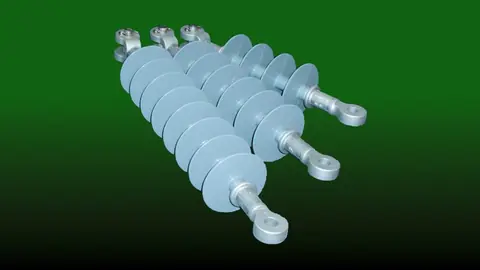 ARPDead End Insulators with Aluminum or Stainless Steel End FittingsCorrosion-resistant 15-35kV silicone dead end insulators with aluminum or stainless steel end fittings for coastal and industrial environments.
- Voltage class
- 15–35 kV
- End fittings
- Aluminum / stainless steel
- Electrical and mechanical ratings
- Match galvanized steel models
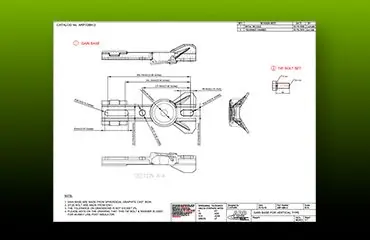 ARPGain Base for Horizontal MountingSteel gain base for horizontal mounting of ARP line post insulators on poles.
- Material
- Steel
- Mounting
- Horizontal
- Compatibility
- ARP tie top and clamp top line post insulators
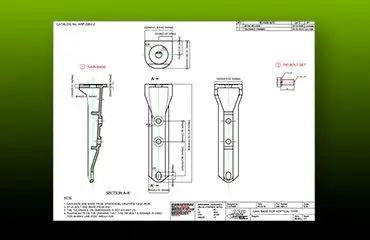 ARPGain Base for Vertical MountingSteel gain base for vertical mounting of ARP line post insulators.
- Material
- Steel
- Mounting
- Vertical
- Compatibility
- ARP tie top and clamp top line post insulators
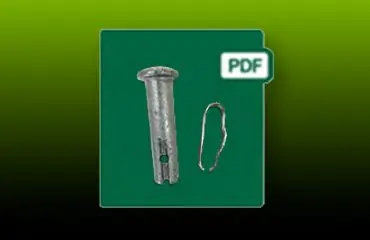 ARPHMCP Patented Clevis PinPatented hand-operated clevis pin for dead end insulators - no loose pins and no tools required.
- Voltage class
- 15–69 (compatible insulator range) kV
- Operation
- Hand operated; no tools required
- Retention
- No loose pins
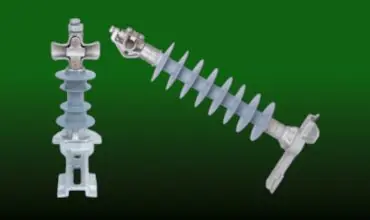 ARPHorizontal and Vertical Silicone Polymer Line Post InsulatorsSilicone polymer line post insulators for horizontal or vertical mounting on 15kV-69kV distribution lines.
- Voltage class
- 15–69 kV
- Mounting
- Horizontal / vertical
- Configuration
- Clamp top
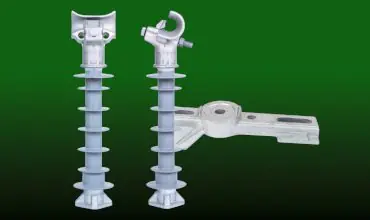 ARPIntegral Bolt Actuated Top Clamp Line Post InsulatorsLine post insulators with a single-bolt actuated integral top clamp gripping conductors from 0.30 to 1.34 inches.
- Voltage class
- 15–69 kV
- Conductor range
- 0.30–1.34 (7.6–34 mm) in
- Configuration
- Single-bolt integral top clamp
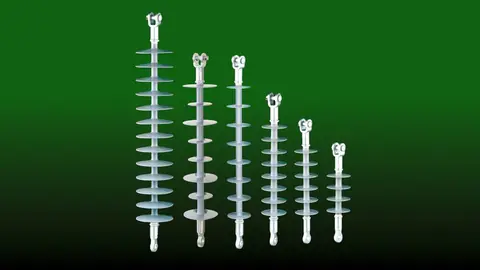 ARPSilicone Polymer Dead End Suspension InsulatorsSilicone rubber dead end suspension insulators for 15kV-69kV distribution lines with galvanized cast steel end fittings and RUS acceptance.
- Voltage class
- 15–69 kV
- Specified mechanical load
- 15,000 (15–35 kV standard units) lbs
- Specified mechanical load (ARP-46SKCE-SHP)
- 20,200 lbs
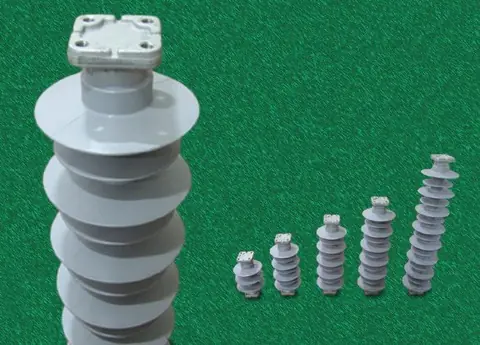 ARPStation Post Silicone Polymer InsulatorsSilicone polymer station post insulators from 7.5kV to 69kV with ANSI 3-inch bolt circle forged steel end fittings.
- Voltage class
- 7.5–69 kV
- Bolt circle
- 3.0 in
- Insulation
- Silicone rubber compound
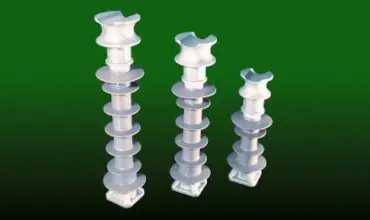 ARPTie Top Silicone Polymer Line Post InsulatorsTie top silicone line post insulators in C-neck and F-neck styles for 15kV through 69kV distribution construction.
- Voltage class
- 15 / 25 / 35 / 46 / 69 kV
- Configuration
- C or F neck (15–25 kV); F neck (35–69 kV)
- Insulation
- Electrical-grade silicone rubber sheds
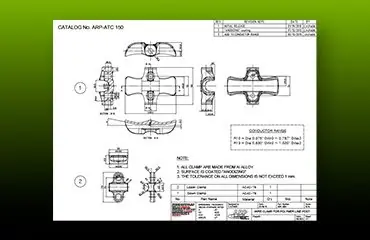 ARPWire Clamp for Polymer Line PostAnodized aluminum wire clamp for attaching conductors to ARP polymer line post insulators.
- Material
- Anodized aluminum
- Application
- Conductor clamp for polymer line posts
- Compatibility
- ARP clamp top line post assemblies
How to choose polymer insulators
Match the insulator type to the structure
The structure and conductor attachment decide the insulator type. Dead ends and suspension points take tension, so they need a Silicone Polymer Dead End Suspension Insulator. Tangent construction on poles and crossarms uses line posts, either tie top or clamp top. Substation bus, switch bases and apparatus use Station Post Insulators with the ANSI 3-inch bolt circle.
| Product | Voltage class | Use | Notable feature |
|---|---|---|---|
| Dead End Suspension | 15-69 kV | Dead end and suspension | 15,000 lb SML standard (15-35 kV) |
| 27 kV Specialty Horizontal Dead End | 27 kV | Horizontal dead end only | Replaces two 10 in porcelain disks |
| Tie Top Line Post | 15/25/35/46/69 kV | Tie-wire attachment | C or F neck |
| Top Clamp Line Post | 15-69 kV | Bolted conductor clamp | 0.30-1.34 in conductor range |
| Station Post | 7.5-69 kV | Substation bus and apparatus | ANSI 3.0 in bolt circle |
Mechanical load rating
Confirm the specified mechanical load (SML) against the design tension on the span, including ice and wind loading. ARP's dead end suspension insulators carry 15,000 lb SML as standard for 15-35 kV, with a 20,200 lb SML option (ARP-46SKCE-SHP) for heavier loading. Where you are replacing porcelain disk strings on 27 kV horizontal dead ends, the 27 kV Specialty Horizontal Dead End replaces two 10-inch disks in one unit.
Contamination and corrosion
Silicone rubber stays hydrophobic, so water beads rather than forming a conductive film, which keeps leakage current and flashover risk down in dusty, industrial and coastal environments. ARP uses boron-free glass fiber rods, which resist brittle fracture from acid attack. On the Gulf Coast or near chemical plants, the Dead End Insulators with Aluminum or Stainless Steel End Fittings avoid the corrosion that galvanized steel fittings can suffer, with specs matching the galvanized models.
Line post attachment style
Choose tie top or clamp top based on crew practice and conductor size. Tie Top Line Post Insulators use conventional tie wire, while clamp-top designs grip conductors from 0.30 to 1.34 inches with a single bolt, which speeds installation and gives a consistent hold.
Installation hardware
Hardware affects crew time and safety as much as the insulator. The HMCP Patented Clevis Pin is hand operated with no loose pins and no tools, and a sliding-lock clevis pin is also available. Horizontal and vertical gain bases and anodized aluminum wire clamps complete ARP line post assemblies.
For deeper background, read Polymer vs Porcelain Insulators, see Polymer Fuse Cutouts for matching distribution hardware, or request a quote.
Frequently asked questions
Polymer vs porcelain insulators?
Polymer insulators are lighter, hard to break and shed water, so they perform well in contaminated areas and are easier to handle and install. Porcelain has a much longer service record and does not age from UV. Its main drawbacks are weight and brittleness. Polymer units depend on good seals, because moisture reaching the fiberglass rod can cause brittle fracture. ARP uses silicone rubber housings over boron-free E-Glass rods, which resist brittle fracture.
What is a dead end insulator?
A dead end insulator is a tension insulator that holds the full pull of a conductor where a line ends, turns a sharp angle or is sectioned. It connects the conductor to the pole or crossarm and electrically isolates the two. Dead end insulators are rated by specified mechanical load (SML). ARP's silicone polymer dead end suspension insulators cover 15 to 69 kV, with a standard 15,000 lb SML and a 20,200 lb version available.
Line post vs station post insulator?
Line post insulators hold conductors on poles for distribution and transmission lines, while station post insulators hold rigid bus and switches in substations. Line posts mount horizontally or vertically and carry the conductor's weight as a bending load. Station posts are stiffer and bolt to structures through a standard bolt circle, so they can handle loads from bus and switch operation. ARP makes both, rated from 15 to 69 kV for line posts and 7.5 to 69 kV for station posts.
What does RUS-listed mean?
RUS-listed means the USDA Rural Utilities Service has accepted a product for use on systems its borrowers build, mainly rural electric cooperatives. Co-ops that finance projects through RUS generally have to use accepted materials, so the listing affects which products they can buy. ARP's silicone polymer dead end suspension insulators are RUS approved from 15 to 46 kV, and its 27 kV specialty horizontal dead end is RUS accepted.