
Secondary Network Products
A network protector is the device that keeps an underground secondary network stable when a primary feeder trips. Ryan Sales offers Richards MFG network protectors, microprocessor relays, isolation devices and vault hardware for 125/216 V, 277/480 V and 347/600 V systems. Our reps help utilities in Texas and Oklahoma plan new installations, relay retrofits and maintenance upgrades.
Send the voltage, ampacity and fault duty. A rep will narrow it down.
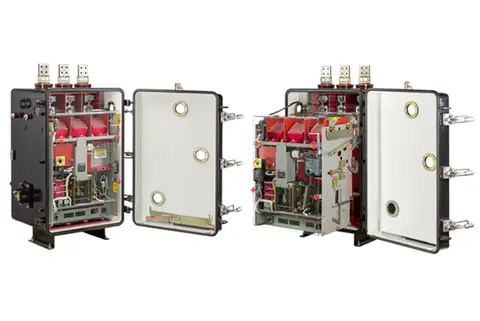 Richards MFG416 NP Network ProtectorNext-generation deadfront draw-out network protector rated 800A-2250A with 30kA interrupting capacity.
- Voltage class
- 125/216; 277/480 V
- Continuous current
- 800–2250 A
- Fault interrupting
- 30 kA
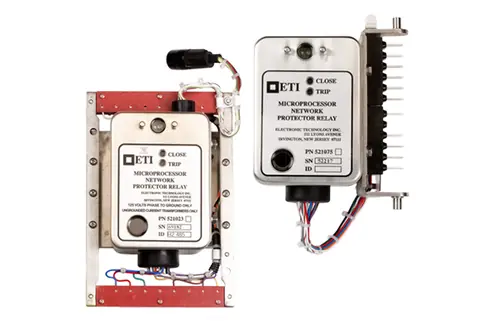 Richards MFGMicroprocessor Network Protector Relay (MNPR)Microprocessor relay that direct-replaces electromechanical and solid state relays in Westinghouse and GE network protectors.
- Voltage class
- 125/216–480 V
- Data acquisition
- 3-phase, with waveform capture
- Analog inputs
- Up to 8
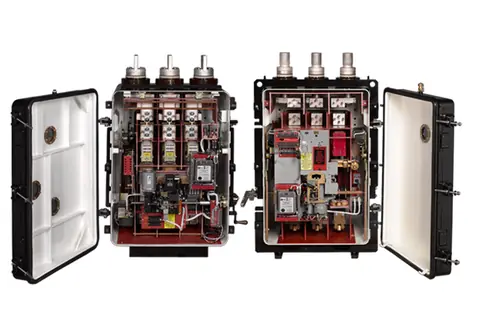 Richards MFGNetwork ProtectorsFull line of network protectors, 800A to 5100A, covering all makes and models plus renewal parts.
- Voltage class
- 125/216; 277/480; 347/600 V
- Continuous current
- 800–5100 A
- Enclosure
- Submersible housings available
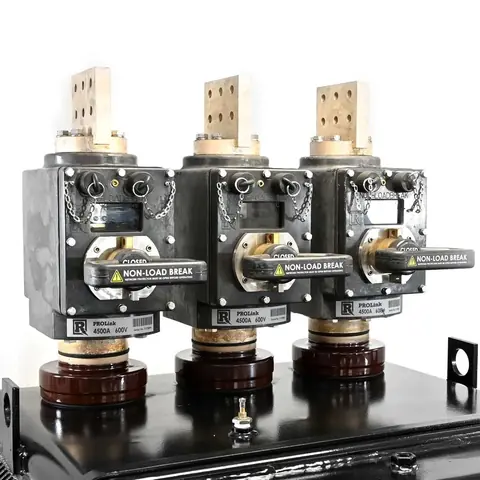 Richards MFGPROLink Isolation DeviceHandle-operated isolation device that disconnects network protectors from the secondary network to reduce arc flash hazard.
- Maximum voltage
- Up to 600 V
- Network protector range
- 800–4500 A
- Enclosure
- Submersible fiberglass
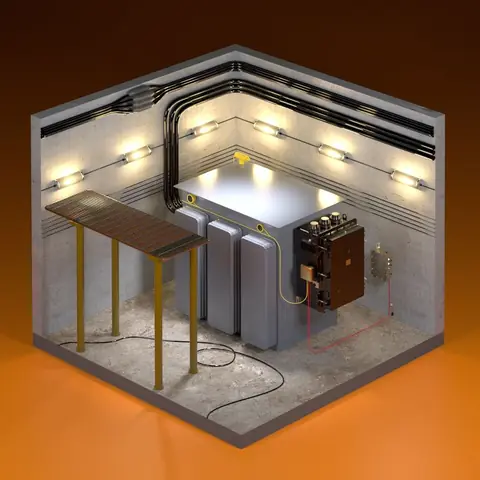 Richards MFGSecondary Network System CommunicationsNon-proprietary SCADA communications system for monitoring underground secondary network distribution.
- Communications
- DNP3 and other common protocols
- SCADA compatibility
- Any SCADA system
- Communication media
- Power line modem / radio / fiber optic / phone line
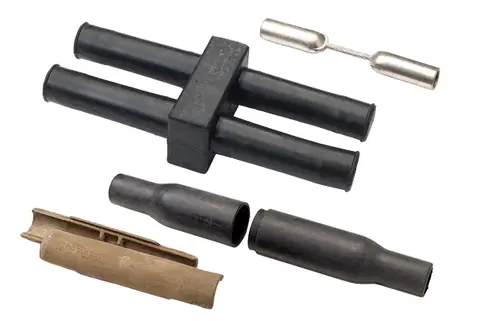 Richards MFGUnderground EquipmentCrab joints, cable limiters, network protector terminals and fuses for underground secondary network construction.
- Styles
- Cable-to-cable limiters / fusible crab joints / network protector terminals / network protector fuses / copper braids / cable racks
- Fuse types
- Low-loss S, Z and Y styles / lead alloy / copper link
How to choose secondary network products
Current and voltage rating
Size the protector to the network transformer and the secondary system voltage first. Richards Network Protectors cover 800 A to 5100 A at 125/216 V, 277/480 V and 347/600 V, with submersible housings for vault installations. The 416 NP Network Protector covers 800 A to 2250 A at 125/216 V or 277/480 V, with 30 kA interrupting and 30 kA fault close ratings.
New protector, renewal parts or relay retrofit
Decide whether the existing unit needs replacement or just a new brain. Many networks still run Westinghouse and GE protectors with electromechanical or solid state relays. The Microprocessor Network Protector Relay (MNPR) direct-replaces those relays and adds three-phase data acquisition and waveform capture, while renewal parts keep legacy mechanisms in service. A full replacement makes more sense when the housing, mechanism or maintenance access is the problem.
| Product | Continuous rating | Voltage | Notable feature |
|---|---|---|---|
| Network Protectors | 800-5100 A | 125/216, 277/480, 347/600 V | All makes and models, renewal parts |
| 416 NP | 800-2250 A | 125/216, 277/480 V | Deadfront draw-out, motorized racking |
| PROLink Isolation Device | 800-4500 A | Up to 600 V | Handle-operated isolation |
Maintenance access and arc flash
Plan how crews will work on the protector safely. A deadfront draw-out design with motorized racking, as on the 416 NP, lets crews rack the unit from a distance. On existing installations, the PROLink Isolation Device disconnects the protector from the secondary network with a handle-operated switch to reduce arc flash hazard during inspection and maintenance.
Monitoring and SCADA
Decide how much visibility you want into the vaults. The MNPR provides DNP3 over isolated RS485, and the Secondary Network System Communications package is non-proprietary, works with any SCADA system and runs over power line modem, radio, fiber or phone line. That choice usually depends on what media already reach the vaults.
Vault hardware and fault protection
Specify the underground hardware that ties the network together. Richards Underground Equipment includes cable limiters, fusible crab joints, network protector terminals and fuses, copper braids and cable racks. Limiters and fused crab joints clear a faulted secondary cable section so the rest of the grid stays energized.
For an overview, read What Is a Network Protector?, and see our connectors and pole line hardware for the secondary splicing connectors used in network systems.
Frequently asked questions
What is a network protector?
A network protector is an automatic air circuit breaker on the secondary side of a network transformer. Its relay trips it open when power flows backward from the network into the transformer, which usually means a fault on the primary feeder. It closes again automatically once conditions return to normal. Network protectors are what let a secondary network keep serving load when a primary feeder fails. Richards MFG makes the 416 NP network protector and the MNPR microprocessor relay.
How does a secondary network work?
A secondary network feeds a low voltage grid from several network transformers on different primary feeders, all tied together on the secondary side. When one primary feeder fails, network protectors open to isolate it, and the other feeders carry the load without an outage. Cable limiters clear faults on the secondary cables. Networks serve dense downtown areas that need high reliability. Richards MFG supplies network protectors, relays, limiters and related underground equipment.